Nature has always been a source of inspiration for interior design, from the earthy colors of landscapes to the patterns found in leaves, flowers, and rock formations. These influences can bring a sense of warmth and individuality to a home, making the interiors feel more personal, inviting, and connected to the world beyond the walls.
Bringing this feeling into a home does not necessarily mean filling every corner with plants or using natural materials throughout. Tiles offer plenty of possibilities, from landscape-inspired colors and botanical patterns to surfaces that echo timber grain or the texture of stone. Even a small tiled area can introduce a touch of nature when its design is chosen thoughtfully.
Here are seven ways to draw inspiration from nature and translate it into tile design.
Introduce Warmth With Terracotta
Terracotta and clay tiles have been a staple of interior design and architecture for years. Their warm reds, rusty browns, muted oranges, and earthy undertones can recall traditional courtyards, sun-baked landscapes, and Mediterranean interiors.
Terracotta-look tiles made with ceramic and porcelain work well in kitchens, entrances, dining areas, and as accent walls. Pair them with warm white, cream, and olive green decor elements for a forest-inspired space.
Beyond traditional styles, terracotta tiles can also be used in contemporary spaces selectively. A terracotta floor, a small backsplash, or a tiled window surround can add warmth to modern interiors without overwhelming the overall design.
Practical Beauty of Wood-Look Tiles
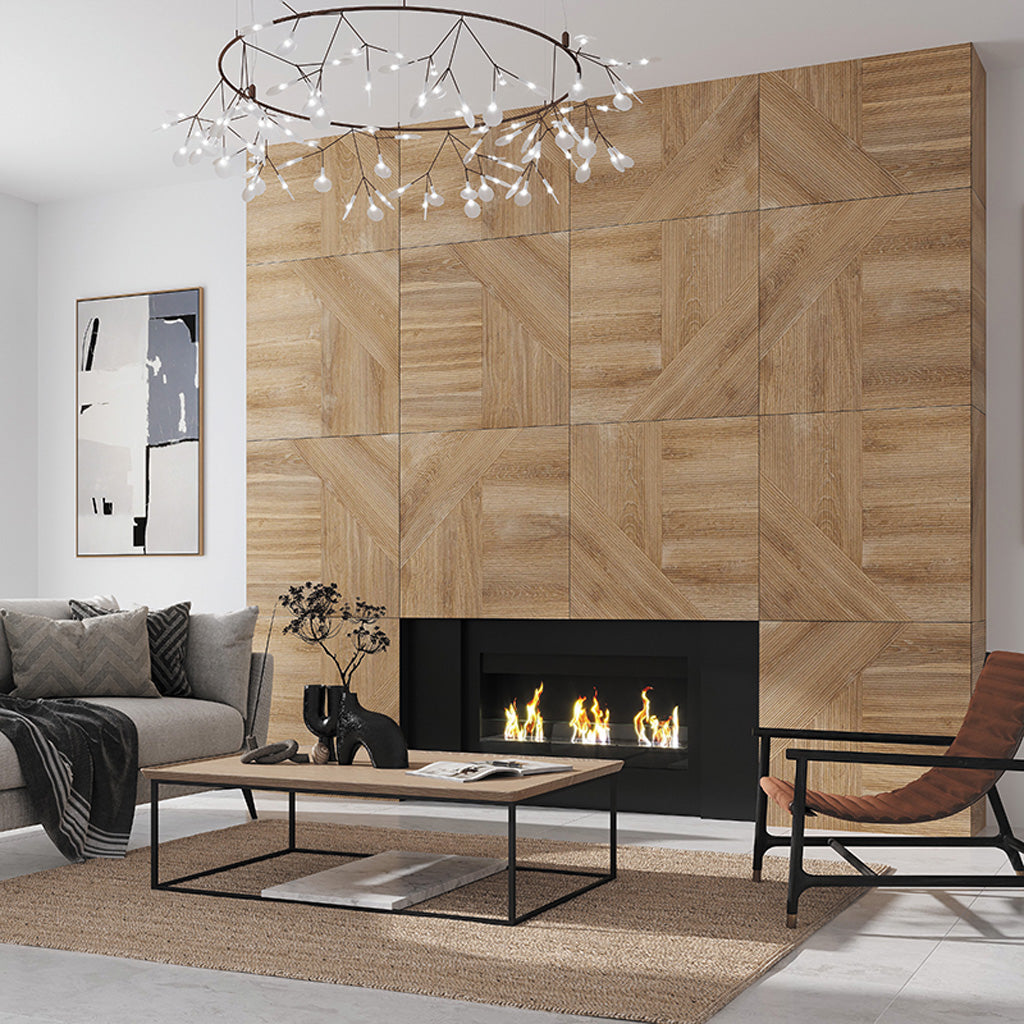
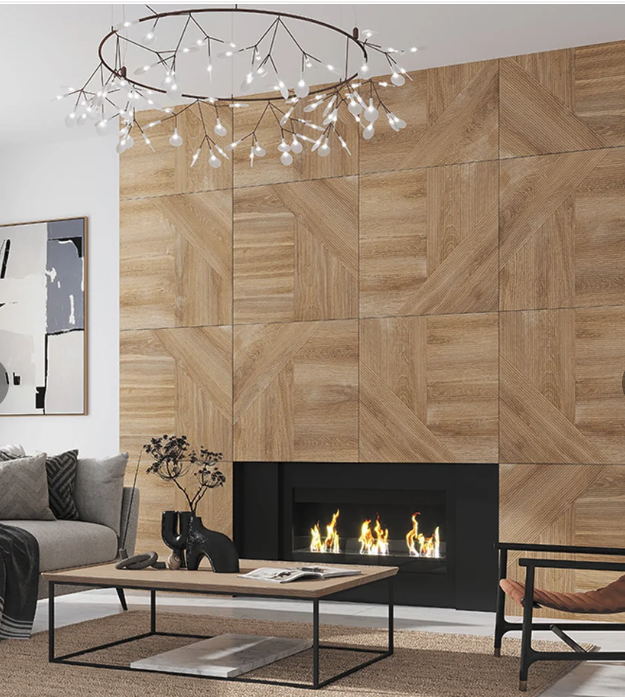
Hardwood is another timeless design element that is known for its warmth and natural grain. However, using natural wood in spaces such as bathrooms, kitchens, and balconies is generally not recommended. But you can still opt for wood-inspired flooring that offers an excellent way to introduce the look and feel of natural wood in the form of porcelain and ceramic tiles. Grain patterns, warm brown tones, and plank-like formats can help create a welcoming base for different furniture styles.
Porcelain wood-look tiles can suit living spaces, bedrooms, dining rooms, and selected wet or outdoor areas, depending on the product’s specifications. Lighter wood tones can complement pale walls and understated furnishings, while deeper brown shades can work with cream upholstery, darker cabinetry, or richer accent colors.
Used thoughtfully, wood-inspired tiles can provide warmth and visual continuity while leaving room for other tile designs to contribute their own character.
Botanical Patterns and Colors
Leafy and floral motifs can bring a garden-inspired touch to interior walls and backsplashes. Botanical tiles can work particularly well in areas where a decorative surface adds interest without taking over the entire room.
Floral and leafy tiles can create a decorative contrast against plain kitchen cabinetry. These patterns are equally well suited for bathrooms and living spaces where they can be used to create defining focal features.
Botanical patterns do not need to look overtly tropical or traditional. A contemporary design with stylized leaves or subtle plant forms can bring a natural reference into a modern interior without changing its overall character. Mediterranean, Spanish-inspired, and Indian style tiles often combine floral motifs with geometric patterns to create striking and colorful pieces.
A nature-inspired palette can also work without decorative patterns. Shades such as sage, olive, forest, and grass green pair well with earthy tones.
Looking Beyond the Usual Palette
A natural palette often brings images of greens and browns, but nature has many other colors to offer. Palettes and designs inspired by water and sky offer a different kind of visual beauty. Their changing colors, reflections, and light can be translated into tile designs that feel fluid rather than rigid.
Sea-inspired blue and blue-green tiles are particularly popular for designing spa-inspired, luxurious showers. A blue-green feature wall can create a distinctive backdrop for a bathroom, while a more understated tiled surface can introduce the same influence without dominating the room.
Sky blue tiles are perfect for bringing a light and airy feel to your reading rooms, kitchens, and nurseries. In bedrooms, sky-inspired tiles can take a different avatar. Dark blue glass mosaics can create a night-sky effect when used on a bedroom feature wall or tiled headboard. Deep blue, charcoal, indigo, and mirror tiles can be used to further enhance this atmospheric effect.
Experiment with Textures
Nature offers a range of textures, from rough stone and layered bark to the irregular surfaces of weathered and handmade materials. Tile finishes can draw on these qualities, adding interest through surface texture rather than bold colors or elaborate patterns.
Matte tiles can create a softer appearance than highly reflective finishes. Textured ceramics can add depth to a feature wall, while handmade-look tiles often feature small variations in glaze, tone, or surface that make the installation feel less uniform.
These qualities can be particularly useful in neutral interiors. A wall finished in a muted beige or gray may gain more character from a textured surface than from introducing another color.
Texture becomes more noticeable when it contrasts with smoother materials. For example, a relief tile backsplash can stand out against flat-front cabinets, while a textured feature wall can add interest beside a smooth countertop or plain painted wall. Keeping the colors related helps the difference in surface finish take the lead rather than making the room feel too busy.
Stone Tiles for Style
From the delicate veining of marble to the muted variations found in limestone and slate, stone offers a wealth of inspiration for tile design. Both natural stones like marble and stone-look tiles can bring these visual qualities into a home while offering options in different sizes, finishes, and patterns.
A subtle stone-inspired floor can provide a quiet foundation for a living room, allowing furniture and artwork to take the lead. In a bathroom, coordinating stone-look wall and floor tiles can create a cohesive appearance. Alternatively, a contrasting wall finish can give the vanity or shower area more definition.
The choice of pattern makes a difference. Pronounced veining tends to draw the eye, while more restrained designs can work across larger surfaces without dominating the room.
Taking Patterns from Nature
Look closely at nature, and you’ll find shapes that rarely fit a perfect grid. Shells curve, stones have uneven edges, and leaves follow their own patterns. Tiles inspired by these forms can bring similar shapes into a room, particularly where straight lines and square edges are everywhere. Rounds and curves are particularly effective in adding a delicate softness to interiors.
Fishscale tiles, scalloped designs, irregular mosaics, and handmade-look ceramics offer different ways to explore this idea. A mermaid-tail tile backsplash can become a conversation piece in a dining area. Scalloped tiles can frame a bathroom vanity, introducing curves that recall the movement of water.
Organic shapes are often most effective when given room to stand out. If a tile already has a distinctive outline or pattern, simple cabinetry and restrained wall finishes can help preserve the effect.
Conclusion
Nature-inspired tile design can draw on landscape colors, botanical patterns, stone textures, and the movement of water. Tiles make it possible to explore these influences across floors, walls, backsplashes, and smaller decorative features.
Even a small area of patterned tile can change how a room feels. Start with the feature you want to highlight, then choose the surrounding materials to complement it.